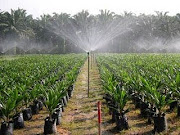
Plantation firms in Sarawak to pay more to recruit new Indonesian workers (15% more in wages to recruit new Indonesian workers)
KUCHING: Plantation companies in Sarawak will have to pay about 15% more in wages to recruit new Indonesian workers soon. Indonesian consul/counsellor Rafail Walangitan (pic) said the minimium daily wages of Indonesian plantation workers in Sarawak would be raised to RM22 from RM19 in three months' time. The last revision by RM3 a day (from RM16) was in 2010.
He said the Indonesian Kuching consulate would only issue job orders to plantation firms to recruit Indonesian workers if they commit to pay the minimium wages.
READ MORE here laaa...
Friday, February 25, 2011

Sunday, February 20, 2011
Leader Make a Lead!!!
IOI Corp Bhd's (1961)second quarter profit surged 13 per cent compared to a year ago, thanks to stronger contribution from its plantation business.
IOI's net profit for the quarter to December 31 2010 was RM520.24 million. Group revenue rose to RM3.97 billion compared with RM3.06 billion before. In its filing to the stock exchange yesterday, IOI said it expects satisfactory performance for the rest of the fiscal year ending June 2011 on prospects of strong palm oil and palm kernel prices and a resilient property market.
Yesterday, its share price rose 13 sen to RM5.71. IOI shareholders' optimism is buoyed by the uptrend in palm oil prices as the current global shortage of vegetable oils is set to keep prices at higher levels. So far this year, crude palm oil (CPO) futures on the Malaysian derivatives exchange are averaging at around RM3,700 a tonne. Yesterday, the third-month benchmark palm oil contract closed at RM3,745 per tonne.
In its second quarter results, IOI's plantation operating profits rose 14 per cent to RM363.7 million from RM319.9 million a year ago. The rise in profits was mainly due to higher CPO and palm kernel prices. The group's average CPO price in the quarter was RM2,800 per tonne while palm kernel price was RM1,979 per tonne. During the quarter, IOI gained RM61 million when it sold off a portion of its investment properties.
Despite the higher profits achieved in refining activities, the resource-based manufacturing segment recorded lower profits mainly due to fair value losses on the adoption of FRS 139. During the quarter, the total fair value losses on derivative contracts recognised was RM73 million. Prior to adoption of FRS 139, derivative financial instruments were not recognised in financial statements. With the adoption of FRS 139, derivative financial instruments are initially recognised at fair value on the date the derivative contract is entered into and are subsequently remeasured at fair value through profit or loss. The resulting gain or loss from the remeasurement is recognised in profit or loss.
Read more HERE:
IOI's net profit for the quarter to December 31 2010 was RM520.24 million. Group revenue rose to RM3.97 billion compared with RM3.06 billion before. In its filing to the stock exchange yesterday, IOI said it expects satisfactory performance for the rest of the fiscal year ending June 2011 on prospects of strong palm oil and palm kernel prices and a resilient property market.
Yesterday, its share price rose 13 sen to RM5.71. IOI shareholders' optimism is buoyed by the uptrend in palm oil prices as the current global shortage of vegetable oils is set to keep prices at higher levels. So far this year, crude palm oil (CPO) futures on the Malaysian derivatives exchange are averaging at around RM3,700 a tonne. Yesterday, the third-month benchmark palm oil contract closed at RM3,745 per tonne.
In its second quarter results, IOI's plantation operating profits rose 14 per cent to RM363.7 million from RM319.9 million a year ago. The rise in profits was mainly due to higher CPO and palm kernel prices. The group's average CPO price in the quarter was RM2,800 per tonne while palm kernel price was RM1,979 per tonne. During the quarter, IOI gained RM61 million when it sold off a portion of its investment properties.
Despite the higher profits achieved in refining activities, the resource-based manufacturing segment recorded lower profits mainly due to fair value losses on the adoption of FRS 139. During the quarter, the total fair value losses on derivative contracts recognised was RM73 million. Prior to adoption of FRS 139, derivative financial instruments were not recognised in financial statements. With the adoption of FRS 139, derivative financial instruments are initially recognised at fair value on the date the derivative contract is entered into and are subsequently remeasured at fair value through profit or loss. The resulting gain or loss from the remeasurement is recognised in profit or loss.
Read more HERE:
Saturday, February 5, 2011
Why call for removal of oil palm seed export ban?
Malaysia can be the the world's largest supplier of germinated oil palm seeds, provided that the government drops its existing gazette that bans the export of the commodity.
The government, since the 1970s, prohibits the export of oil palm seeds to ensure enough supply for local farmers as well as protect the seeds' intellectual property rights from being copied by other oil palm producers. Malaysia, however, does supply oil palm seeds to Malaysian companies overseas as well as to Honduras, Colombia, Sierra Leone, Thailand and Indonesia on a government-to-government basis.
"Malaysia, in total, produce 80 million oil palm seeds, of which 50 million are supplied to local planters while the remaining 30 million can be sold to other customers. "We have received a lot of enquiries from overseas customers and hope that the government will lift this gazette,"
Read More >> here
Malaysia can be the the world's largest supplier of germinated oil palm seeds, provided that the government drops its existing gazette that bans the export of the commodity.
The government, since the 1970s, prohibits the export of oil palm seeds to ensure enough supply for local farmers as well as protect the seeds' intellectual property rights from being copied by other oil palm producers. Malaysia, however, does supply oil palm seeds to Malaysian companies overseas as well as to Honduras, Colombia, Sierra Leone, Thailand and Indonesia on a government-to-government basis.
"Malaysia, in total, produce 80 million oil palm seeds, of which 50 million are supplied to local planters while the remaining 30 million can be sold to other customers. "We have received a lot of enquiries from overseas customers and hope that the government will lift this gazette,"
Read More >> here
Saturday, January 29, 2011
Aloha 2011
Welcome 2011.
"My personal view is that when you expand beyond a certain size, you lose sight of your palms and more importantly, your people. It is not about being the biggest, it’s about being the most efficient.”
“In times of high prices, oil palm planters should remain focussed on improving their cost base and increasing yields. Nothing can reduce one’s costs of production faster than increasing yields and vice versa.
“Planters should also focus on increasing their productivity in most field operations by enhancing supervision or through newer practices such as mechanisation,”
Read More Here
"My personal view is that when you expand beyond a certain size, you lose sight of your palms and more importantly, your people. It is not about being the biggest, it’s about being the most efficient.”
“In times of high prices, oil palm planters should remain focussed on improving their cost base and increasing yields. Nothing can reduce one’s costs of production faster than increasing yields and vice versa.
“Planters should also focus on increasing their productivity in most field operations by enhancing supervision or through newer practices such as mechanisation,”
Read More Here
Friday, November 12, 2010
Thursday, November 4, 2010
Oil palm: 365,000 hectares to be replanted in 2011
October 29, 2010
KUALA LUMPUR, Oct 29 — The government’s new replanting scheme will target 365,000 hectares of Oil palms older than 25 years as the world’s No.2 palm Oil producer tries to lift flagging output, a top industry official said on Friday. Industry regulator the Malaysian Palm Oil Board’s (MPOB) new chairman, Shahrir Samad, said the scheme would take two to three years to complete and the government had pledged RM297 million under the 2011 budget.
The scheme is the latest initiative to boost yields in Malaysia, which has fallen behind top producer Indonesia in terms of output. An earlier industry-funded scheme to replant 200,000 hectares in 2008 in a bid to boost slumping prices was almost completed this year. I think we can easily achieve 17.5 million tonnes (in 2011) even with this new replanting scheme as there will be more young Oil palms coming into maturity,” Shahrir told Reuters in his first interview with the foreign media as MPOB chief. Shahrir’s forecast was 4.9 per cent lower than the government’s production target of 18.4 million tonnes for next year and roughly the same as his projection of 17.5 million tonnes in 2010.
Friday, October 8, 2010
Kalau di Malaysia???
NORHAMPTON - Seorang penternak diarah oleh pihak berkuasa haiwan membakar tanaman bernilai £8,000 (RM39,406) di ladang ternakannya di Brooklands, Britain selepas bahan buangan manusia bertaburan di tanah miliknya itu, lapor sebuah akhbar semalam.
Penternak itu, Ian Clegg percaya bahan buangan manusia itu seperti tuala wanita yang terdapat di ladangnya terjatuh dari sebuah pesawat. "Saya pergi untuk mengawasi ternakan dengan seorang anak lelaki saya pada Selasa lalu dan kami menemui najis manusia itu bertaburan di kawasan seluas 10.11 hektar," katanya.
Baca Lagi >>>
Subscribe to:
Posts (Atom)